
Industrial Garage Doors in Eugene, Oregon
An industrial garage door faces the toughest test there is: heavy loads, constant cycling, and no tolerance for downtime. Crawford Windor installs and services industrial doors built to hold up.
We handle the full range of industrial applications, from high-cycle and insulated doors to heavy-duty rolling steel, for manufacturing plants, distribution and warehouse facilities, agricultural buildings, and more.
We are locally owned and family operated, with our own crews, and we have been doing this in Lane County since 1948. For ongoing service, see our repairs and maintenance page.
- Industrial Service Calls: $175/hour plus parts
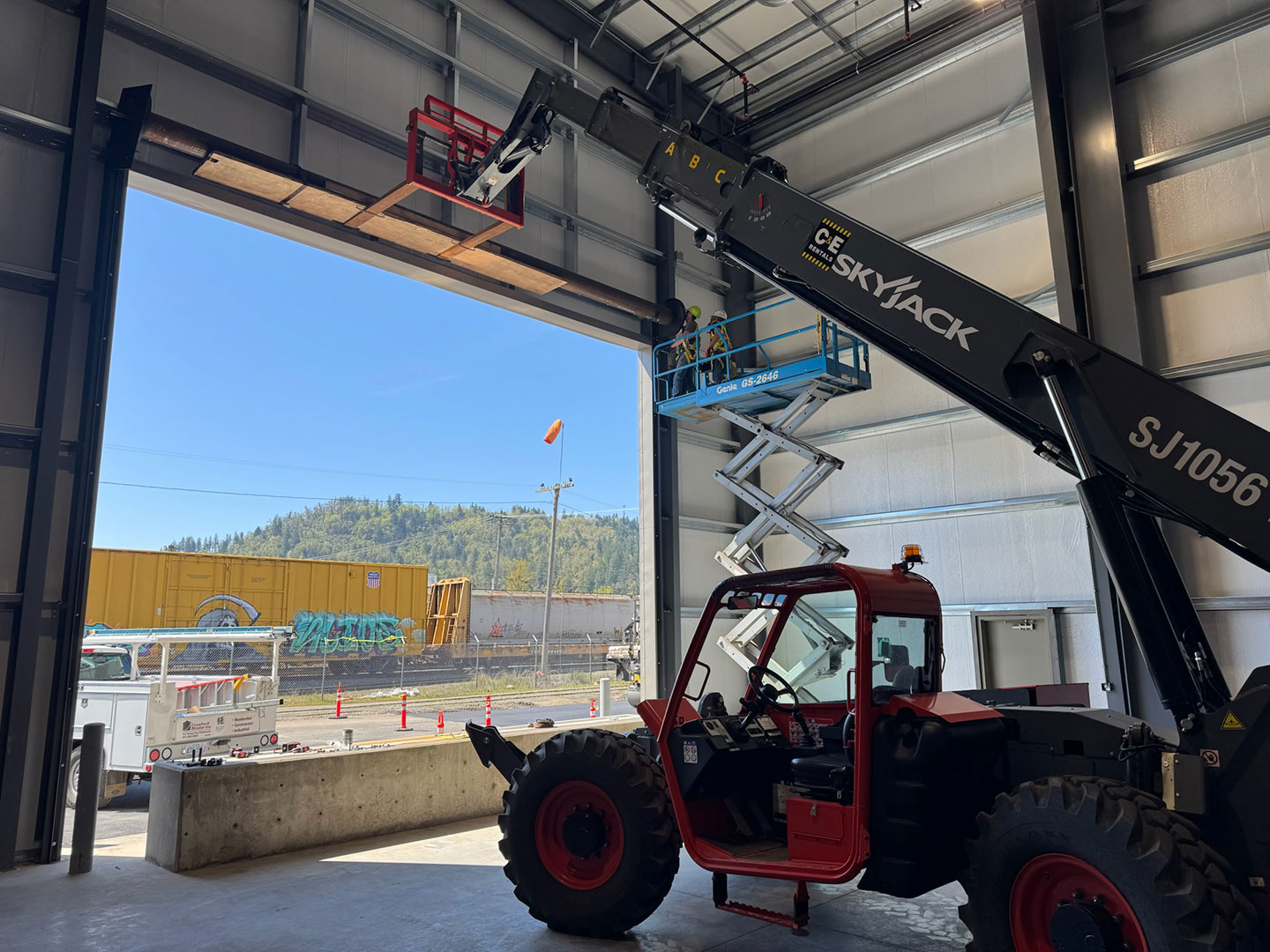
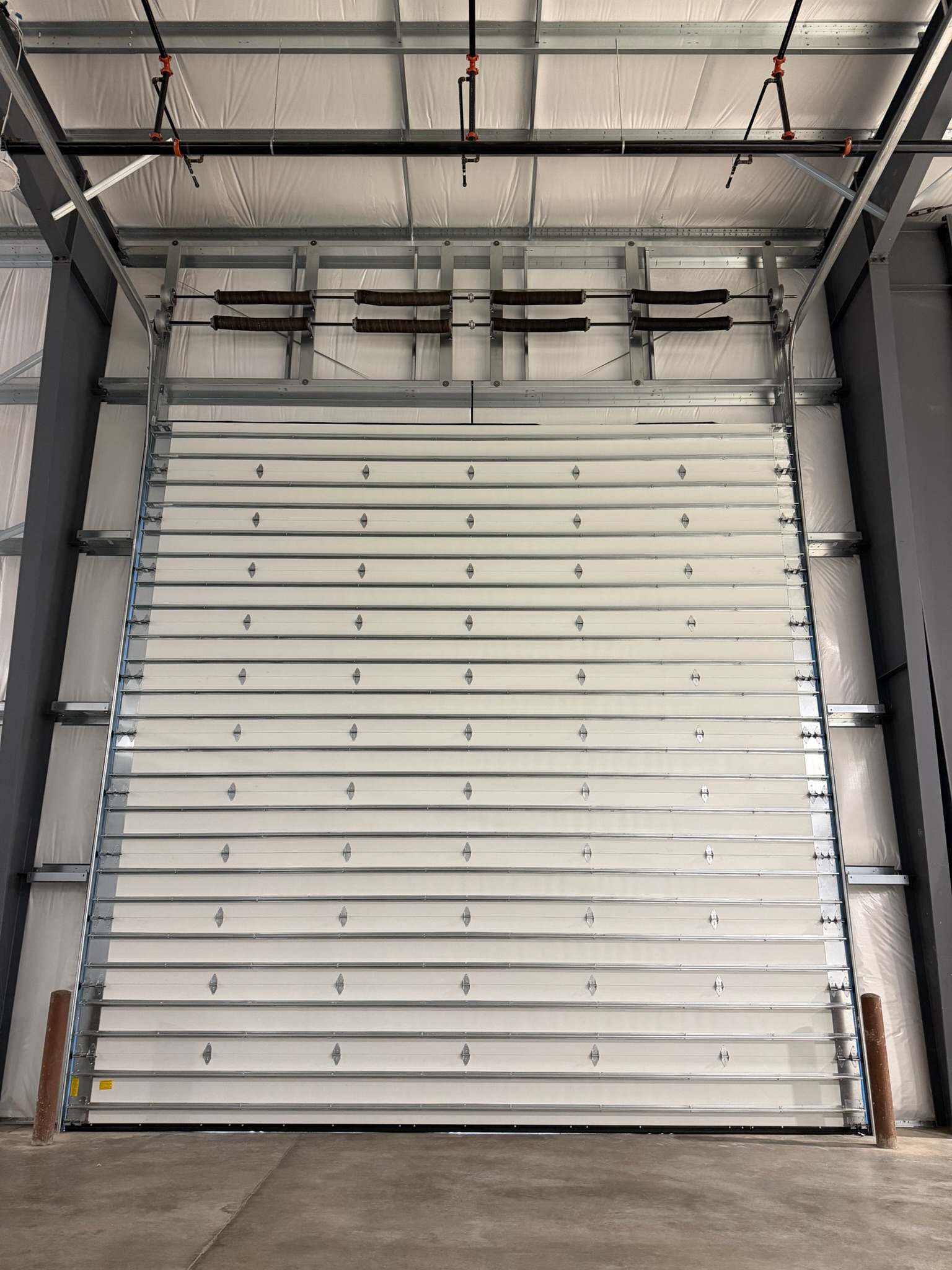
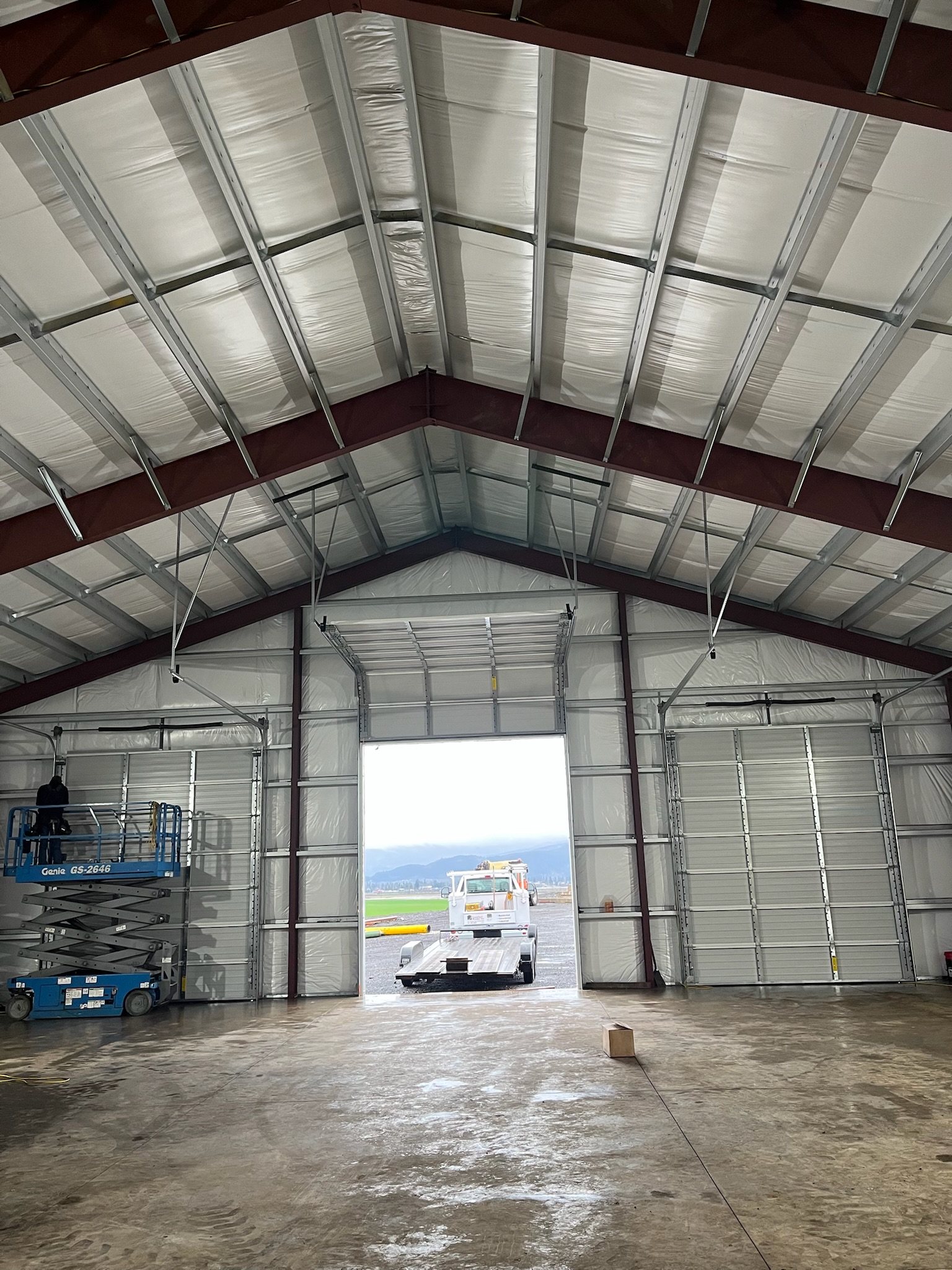
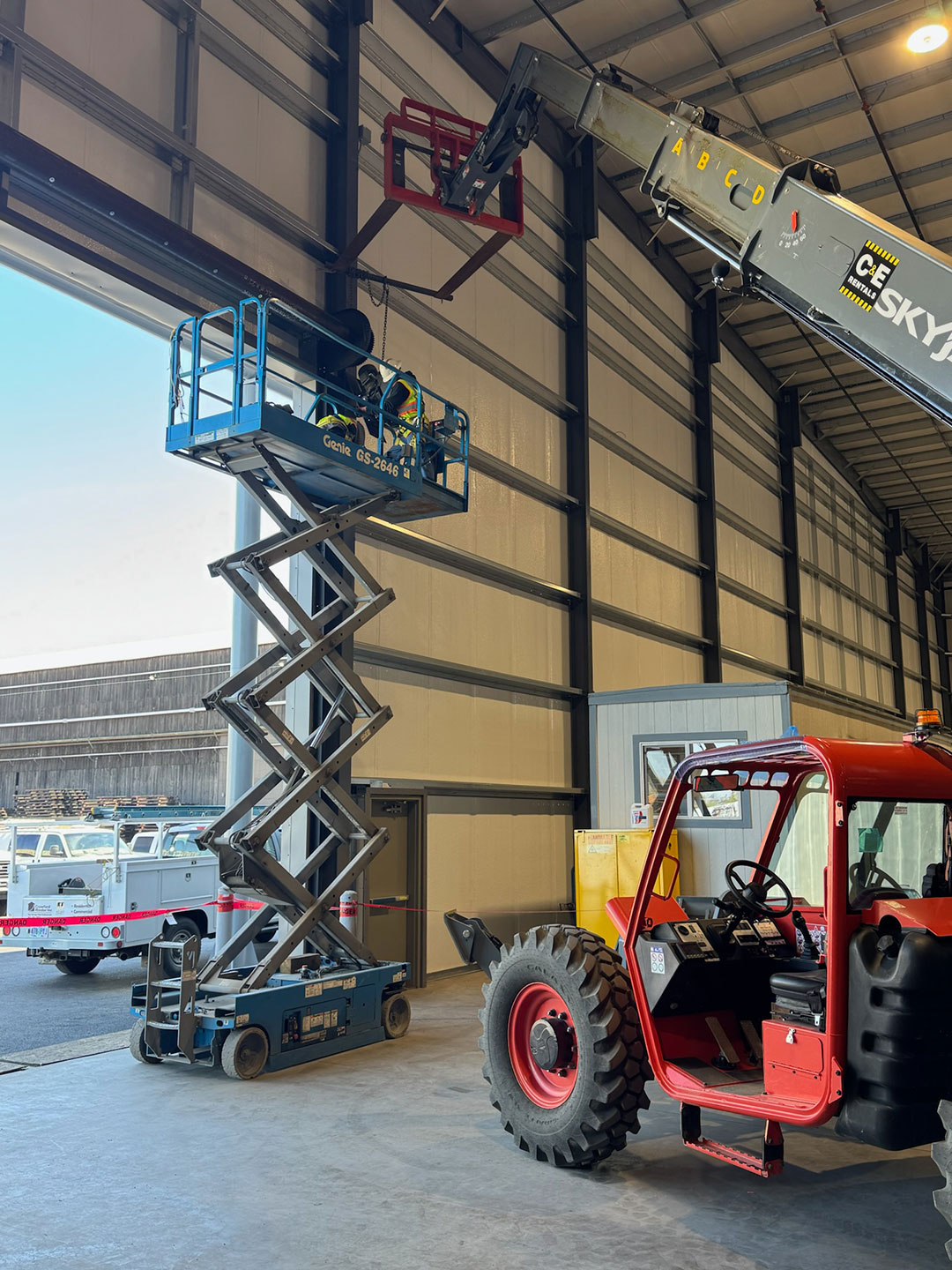
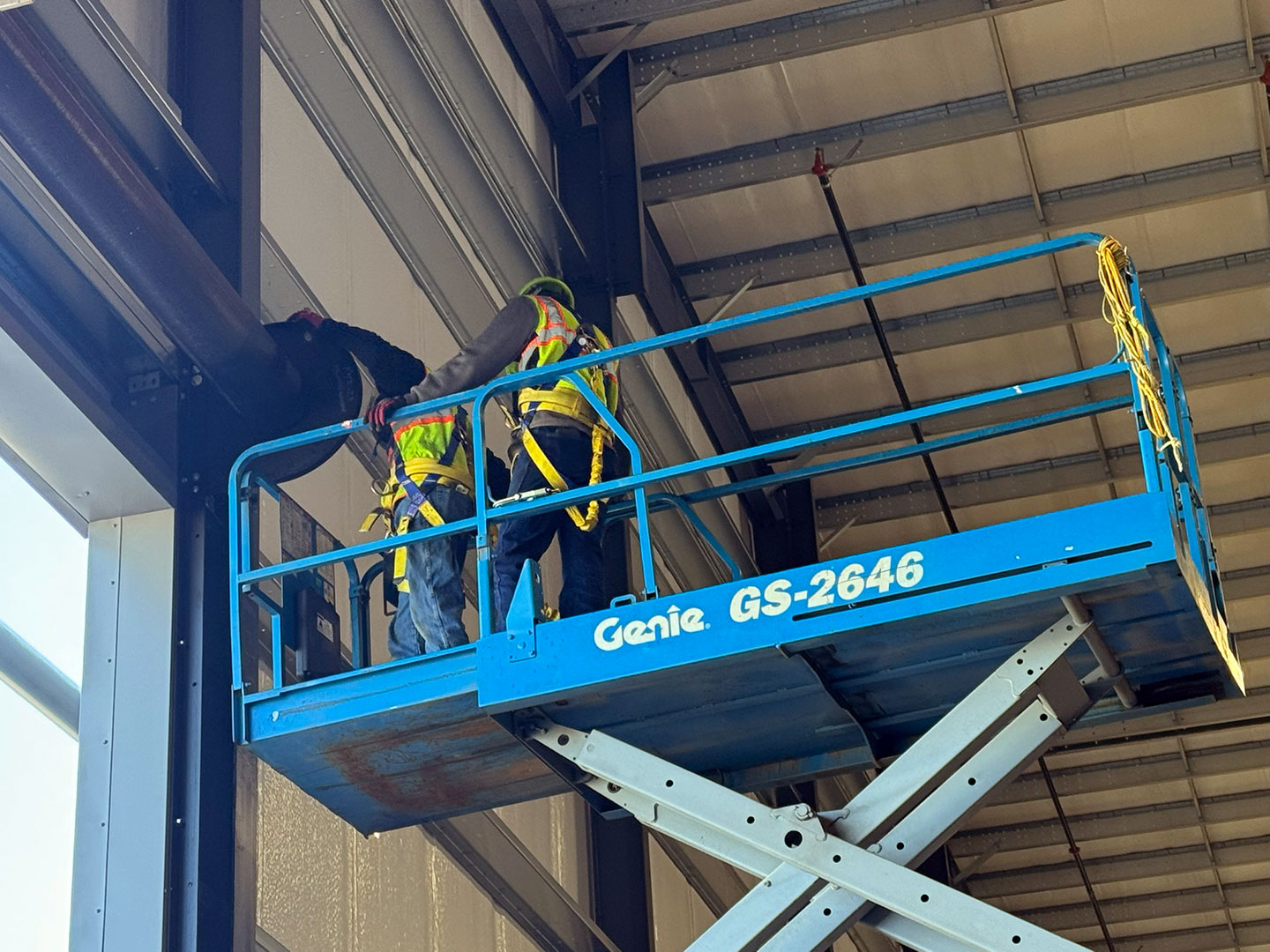
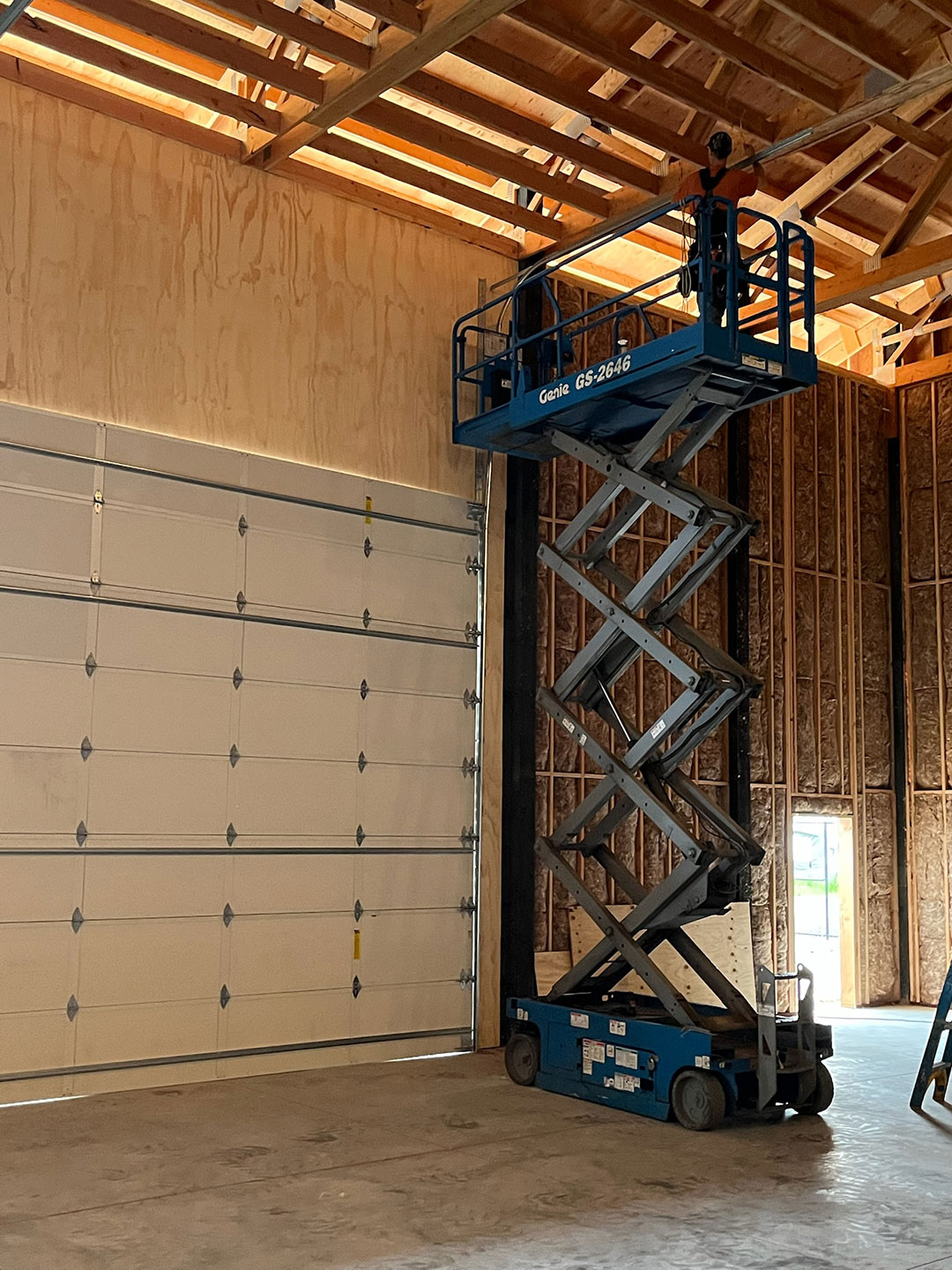
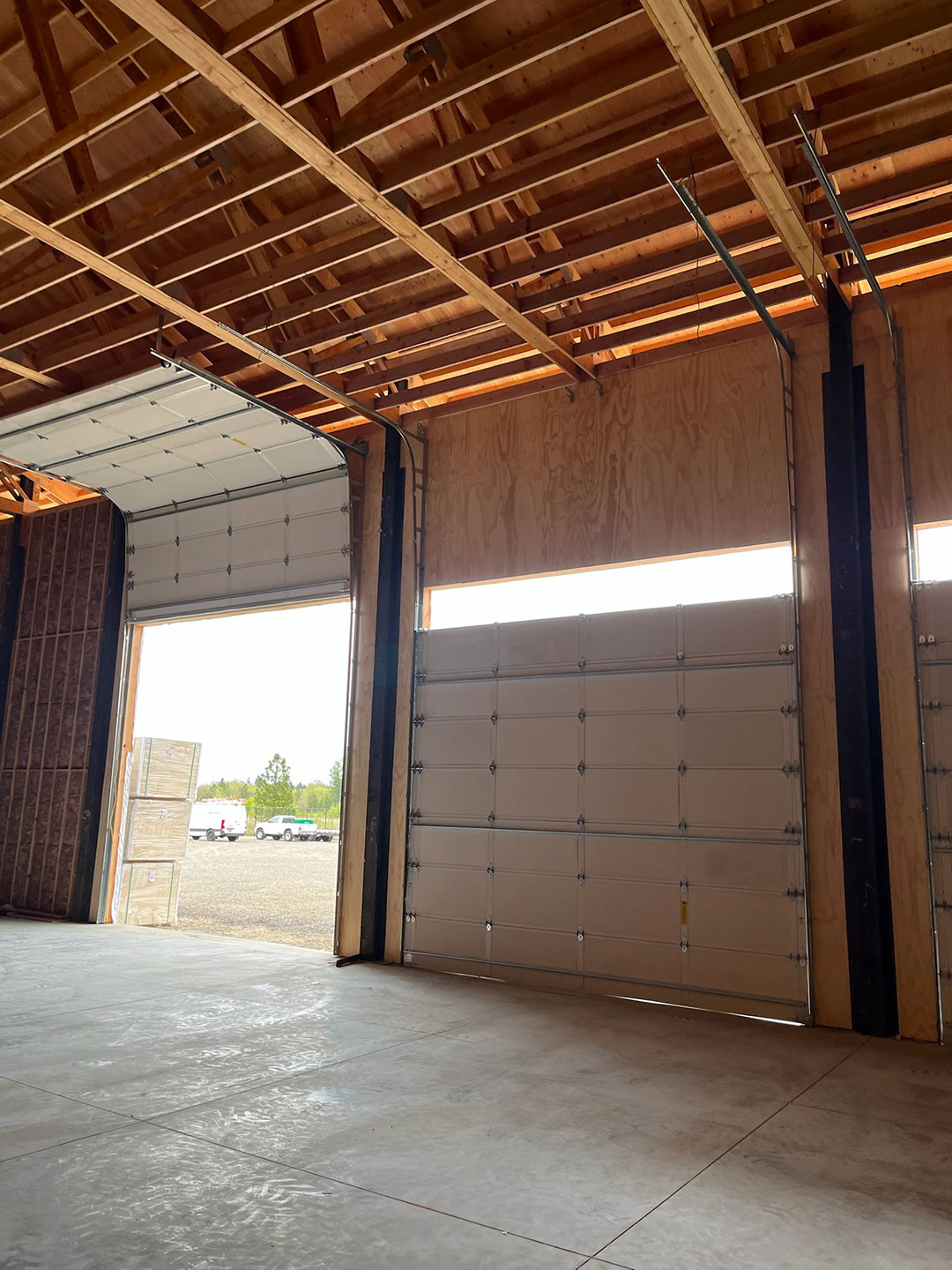
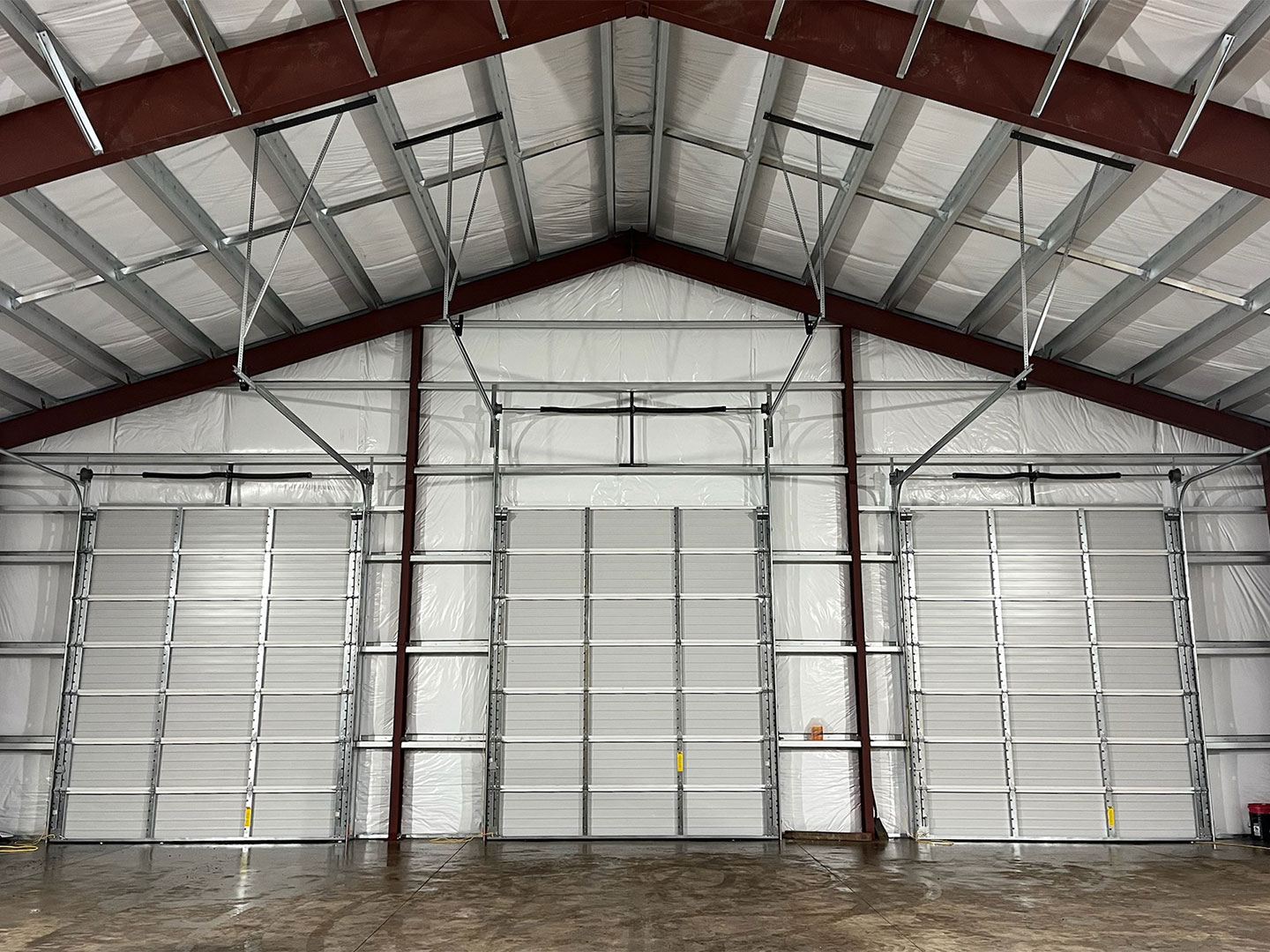
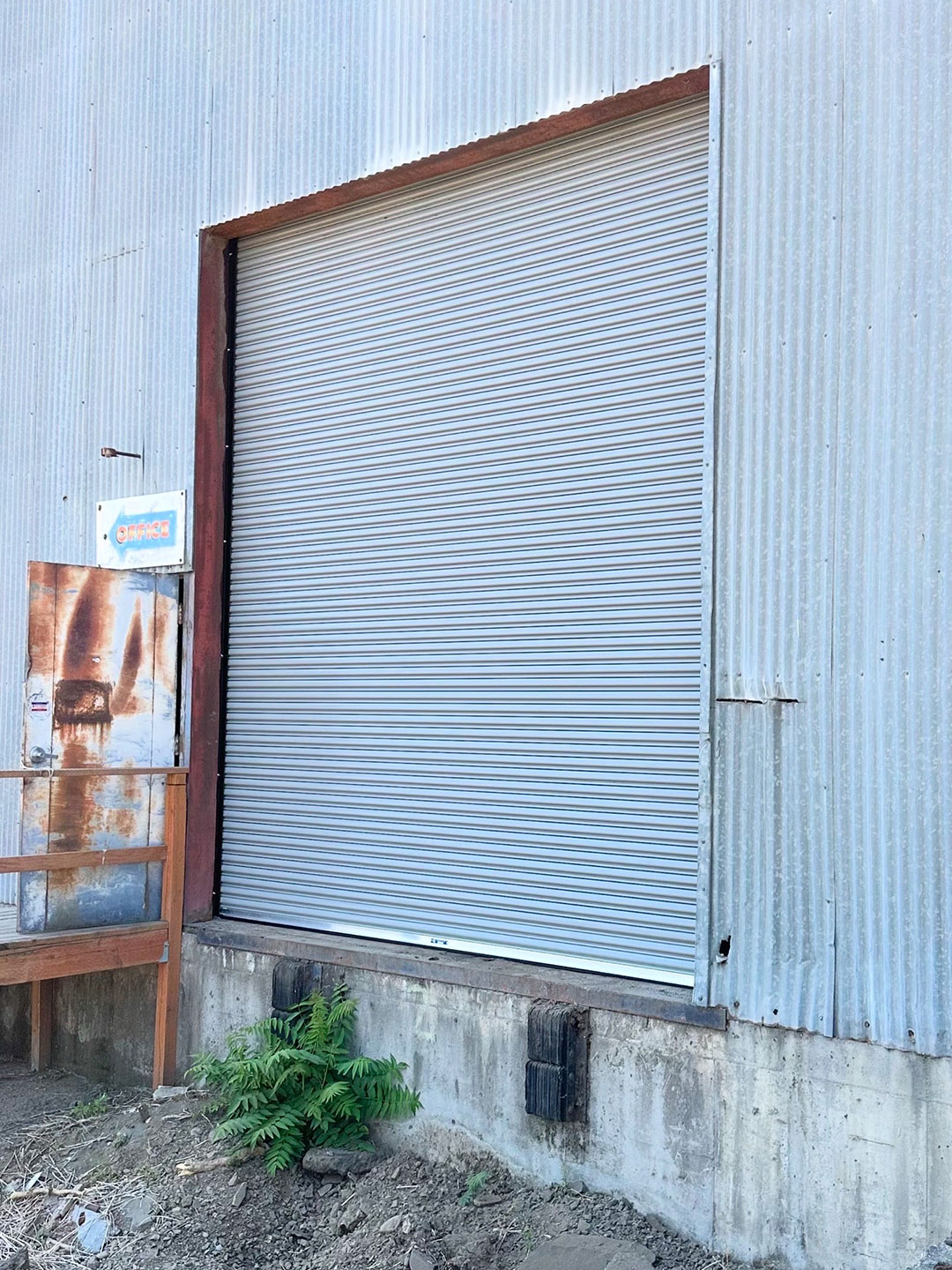
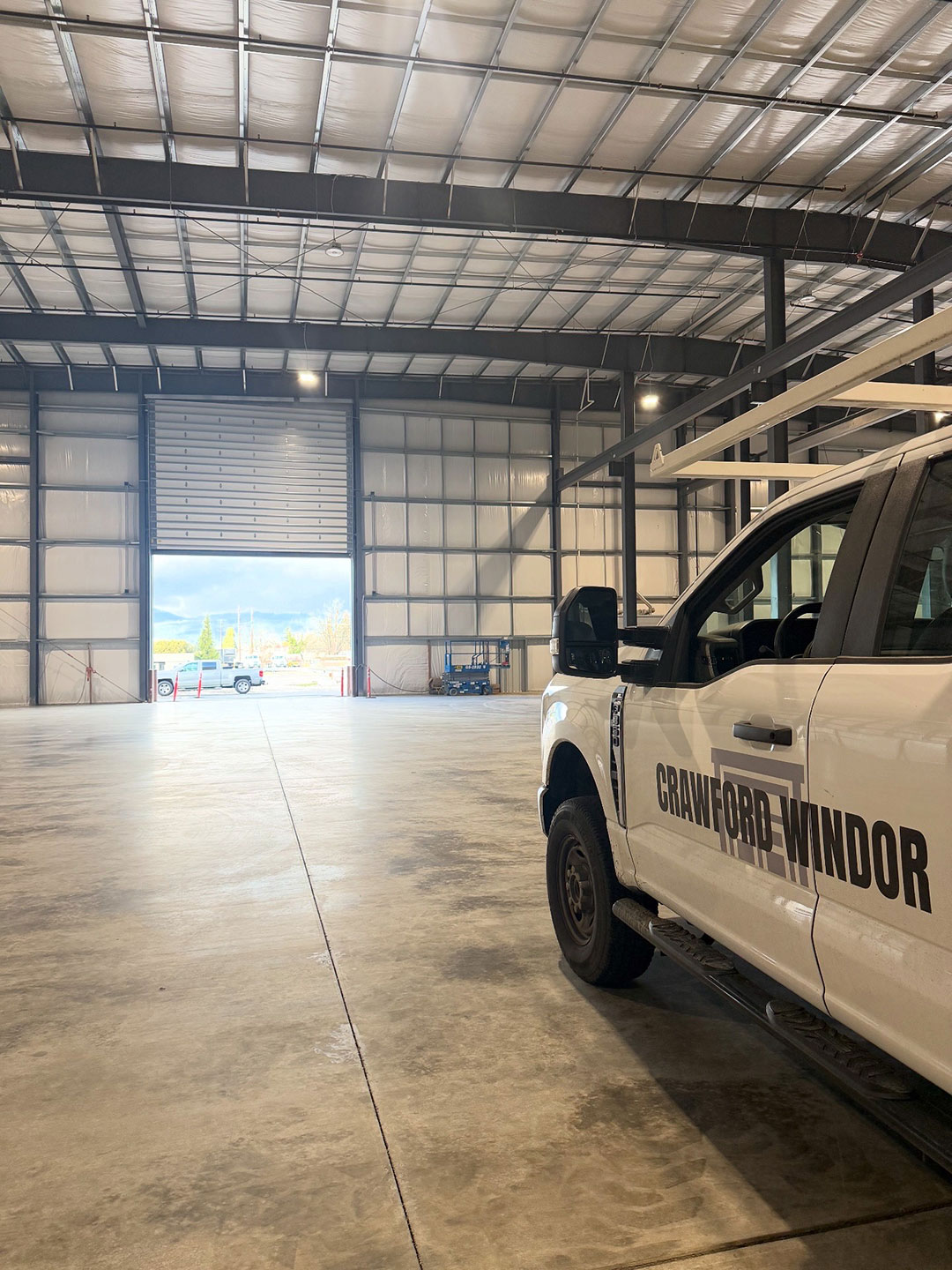
Built for Heavy Use
An industrial door is a different animal from a residential or even a commercial one: larger, heavier, and cycled far more often. Getting it right takes genuine expertise, and more than 75 years in this business is exactly where that comes from. We install robust, high-cycle hardware designed to keep working shift after shift, and our crews are here to service it.
We work with heavy-duty industrial garage door manufacturers including R&S Manufacturing and LiftMaster operators.
What Makes a Door Industrial Rather Than Commercial
People use “commercial” and “industrial” interchangeably, but for a door they are not the same specification. A retail storefront might cycle its door twice a day. A distribution dock can cycle the same opening a hundred times before lunch, and that difference changes almost every component in the assembly.
Industrial openings tend to be wider and taller, which means heavier curtains or panels, larger torsion shafts, bigger bearings and drums, and brackets sized to match. The operator has to be rated for continuous duty rather than occasional use. Even the fasteners are working harder. Specify a light-commercial door into an industrial opening and it will function beautifully for a few months and then start failing in ways that are expensive to keep patching.
The buildings we see most are manufacturing plants, distribution and warehouse facilities, and agricultural buildings — places where an opening is part of a working process rather than an entrance somebody walks through.
Cycle Rating Is the Number That Matters
If you take one number away from this page, make it the cycle rating. A garage door spring is not rated in years, it is rated in cycles — one open and one close. Standard torsion springs are commonly built to somewhere around 10,000 cycles. High-cycle springs are available in roughly the 25,000 to 100,000 range.
Now do the arithmetic on your own building. A door opened and closed thirty times a day passes 10,000 cycles in under a year. On a standard spring that is a failure inside twelve months, almost always at the least convenient moment, and each failure costs you a service call plus however long the bay sits idle. On a high-cycle spring the same door runs for years.
This is why the cheapest quote on an industrial garage door is so often the most expensive one over five years. It is worth asking anybody bidding your job what cycle rating they have specified, and why.
Insulation and Sealing on a Conditioned Building
An opening in an industrial building is also a hole in the building envelope, and it is usually the largest one. In a conditioned space — anywhere you are heating, cooling, or holding a temperature for what is stored inside — the door and its seals do real work on your energy bill.
Two things matter and they are not the same. Insulation value is about the door itself, and an insulated sandwich panel resists heat transfer far better than a single skin of steel. Sealing is about everything around the door: the perimeter, the bottom astragal against an uneven slab, and the gaps that open up as the building settles and the track wears.
A well-insulated door hung in a poorly sealed opening will still cost you money. Both are worth looking at together, particularly on an older building where the opening has been repaired more than once.
Minimize Your Downtime
Because we are local and family owned, you are not filing a ticket with a national service center. You are calling a company down the road that has your building on file, staffed by crews who are already working in the area.
Serving industrial clients across Lane and Linn counties, including Eugene, Springfield, Albany, and Harrisburg.
Need an industrial quote? Call 541-342-2823 or contact us online.
Frequently Asked Questions
What counts as an industrial garage door?
Less the label than the duty. Industrial openings are usually wider and taller than commercial ones, and they cycle far more often — which drives heavier curtains and panels, larger shafts, bearings and drums, and an operator rated for continuous use. We see them most on manufacturing plants, distribution and warehouse facilities, and agricultural buildings.
How much does industrial garage door service cost?
Industrial and commercial service calls are $175 per hour plus parts. New doors, replacement operators and full openings are quoted individually, because the price turns on the size of the opening, the specification of the door and what is already in place. Call 541-342-2823 and we will put an estimate together.
What is a high-cycle spring, and do I need one?
Springs are rated in cycles rather than years — one open and one close is a cycle. Standard springs are commonly built to around 10,000 cycles, and high-cycle springs run roughly 25,000 to 100,000. A door that opens thirty times a day reaches 10,000 cycles in under a year, so on a hard-working opening the high-cycle option usually pays for itself well before the first replacement would have come due.
Which industrial manufacturers do you work with?
We install heavy-duty industrial doors from R&S Manufacturing and operators from LiftMaster, both chosen for how they stand up to continuous-duty use.
Do you work outside Eugene?
Yes. We serve industrial clients across Lane and Linn counties, including Eugene, Springfield, Albany and Harrisburg. Our office hours are Monday to Friday, 8:30 am to 4:30 pm.
