The most common reason people finally replace a working garage door opener is not that…
Custom Garage Doors: Your Dream Door May Cost Less Than You Think
8.
Custom Garage Doors: Your Dream Door May Cost Less Than You Think
Most people who ask us about custom garage doors open with an apology. They describe what they actually want, then immediately talk themselves out of it, on the assumption that anything other than a plain white panel belongs to a different budget.
Often it does not. The gap between the door people settle for and the door they wanted is usually smaller than they expect — and occasionally it is nothing at all.
What “custom” actually means
There are two different things hiding under one word, and confusing them is what makes people flinch.
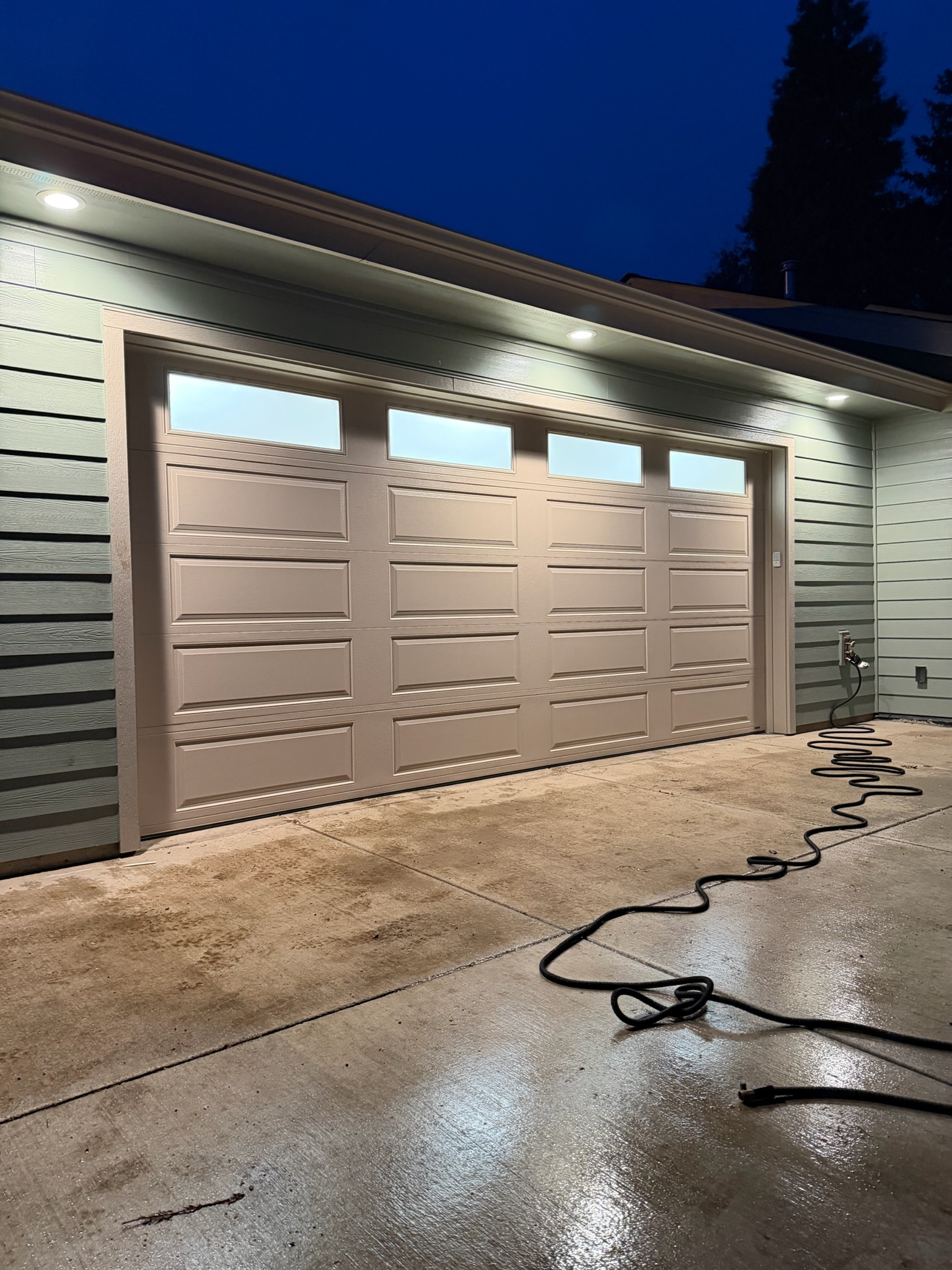
The first is a genuinely bespoke door: built to a non-standard size, or made from real wood, or fabricated to a drawing. Those are expensive, and honestly so. The second — which is what most people actually mean — is a stock door configured to your house. Panel design, colour or woodgrain finish, window layout, glass type, decorative hardware. The door is manufactured on a standard line. You are choosing from an enormous menu rather than commissioning a one-off.
Nearly everything people show us on their phone falls into the second category. That is the good news, because the second category costs a fraction of what the first does.
Where the money actually goes
Four things move the price meaningfully: size, construction, material, and glass.
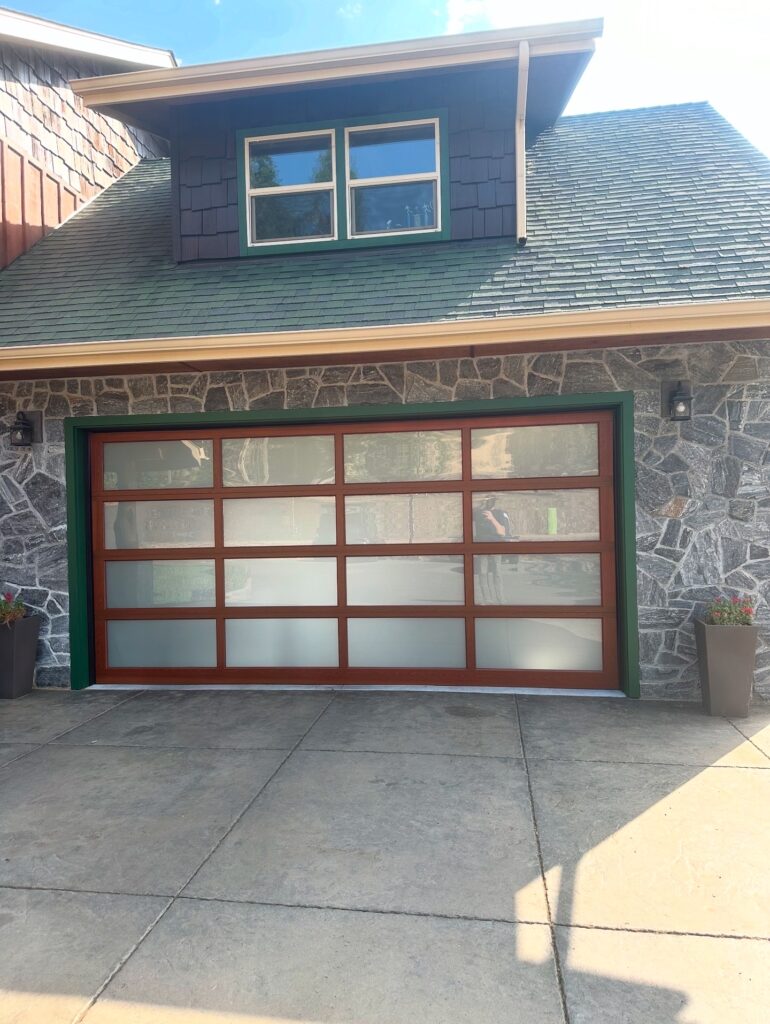
Size is the blunt one — a non-standard opening means a non-standard door, and that is a real premium. Construction matters next: a single-layer steel door, a two-layer with insulation bonded behind the skin, and a three-layer sandwich with a finished interior are three different products at three different prices, and the difference is felt in weight, quietness and rigidity as much as in insulation. Material is where the jump is steepest — steel with a convincing woodgrain finish sits in one world, real cedar or mahogany in another entirely. Glass is the quiet one: a few small windows are inexpensive; a full-view aluminium and glass door is a design statement priced accordingly.
Colour, panel style and decorative hardware — the three things that most change how a door looks from the street — are usually the cheapest variables on the list.
The custom garage doors that cost less than people expect
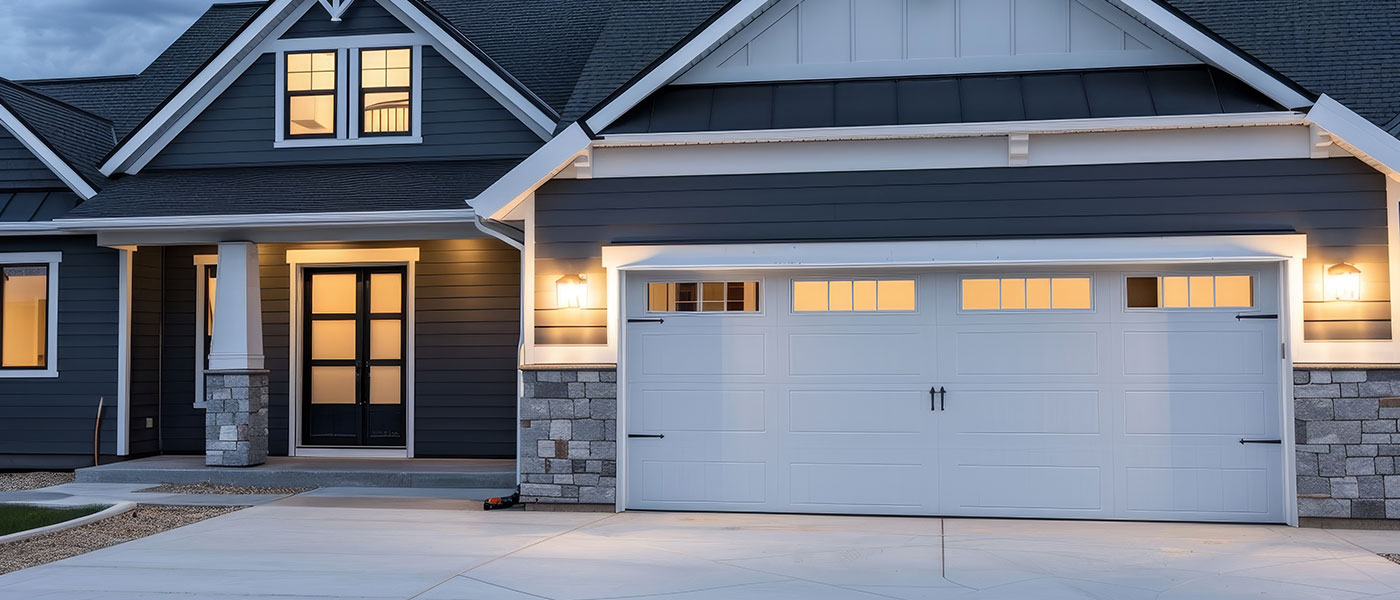
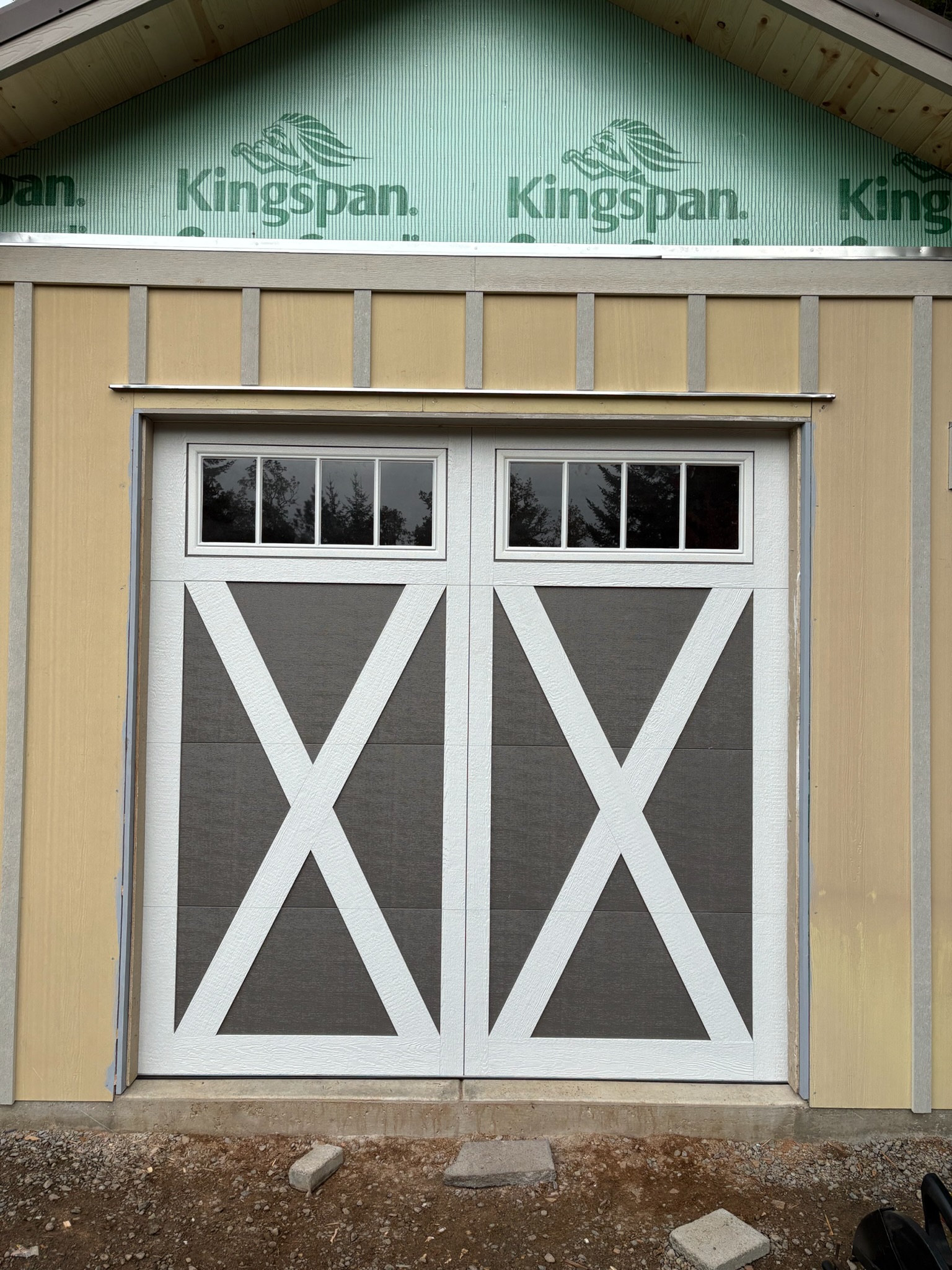
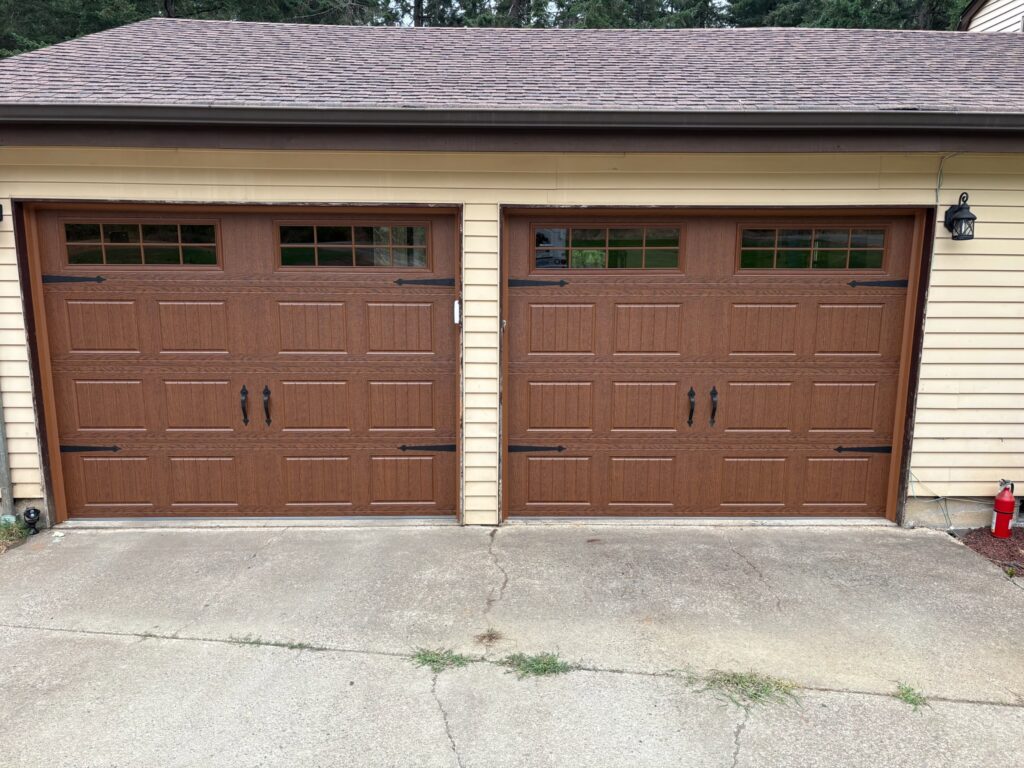
Carriage-house styling is the clearest example. The look people associate with expensive homes — the X-brace, the strap hinges, the row of upper windows — is available as a pressed steel door from every major manufacturer. It operates on a normal overhead track, it insulates properly, and it costs a modest amount more than the plain panel next to it in the catalogue.
Woodgrain finishes are the second. Modern printed and embossed finishes on steel have got good enough that from the kerb you would not call it. They also do not need refinishing every few years, which is what real wood asks of you in an Oregon winter.
The third is windows. Adding a top row of glazed panels changes a door more than almost any other single decision, and it is rarely the expensive part of a quote.
What genuinely pushes the price up
Real timber. Oversized or unusually shaped openings. Full-view glass, especially with insulated or specialty glazing. Doors that must meet a specific wind-load rating. And matching an existing door on a second bay years later, where the original finish may no longer be produced.
None of these are reasons not to proceed. They are simply the things worth knowing before you fall in love with a photograph.
Design it before you buy it
The single most useful thing you can do costs nothing. Most manufacturers now publish visualisers that let you upload a photograph of your own house and try doors on it — Wayne Dalton’s Design Center is a good one, and lets you work through size, collection, colour, window style, glass and hardware step by step.
Do that first. It takes twenty minutes, it costs nothing, and it turns a vague preference into a specification we can price accurately. It also tends to settle household arguments faster than any showroom.
How long it takes
A stock door in a standard size and a common colour can often be on site within a couple of weeks. Configure it heavily — an unusual finish, a specific glass, a non-standard width — and you are into manufacturing lead times that can run to several weeks or longer, particularly in spring and early summer when everybody decides at once.
That matters mostly if you are working to a date: a house going on the market, a build being handed over, a family event. Decide early and the wait is irrelevant. Decide late and lead time, not budget, becomes the thing that limits your choice. It is the most common avoidable disappointment we see.
Start with the house, not the catalogue
A garage door is frequently the largest single surface on the front of a home, which is why replacing one changes a house so disproportionately — and why, in the national Cost vs. Value Report, garage door replacement has repeatedly ranked first among home improvement projects for the share of its cost recovered at resale.
The lines we carry — Hörmann, Amarr, Wayne Dalton and Midland — between them cover most of what people want, from plain and practical to genuinely striking. Come and tell us what you are trying to achieve rather than which product code you want, and let us work out what it costs before you decide it is out of reach.
Have a look at our residential doors, browse the tips and resources, or send us a photo of your house and we will tell you honestly what your options are.
Related Posts