The most common reason people finally replace a working garage door opener is not that…
Behind the Crew: What Goes Into Installing a 1,000-Pound Commercial Door
7.
Behind the Crew: What Goes Into Installing a 1,000-Pound Commercial Door
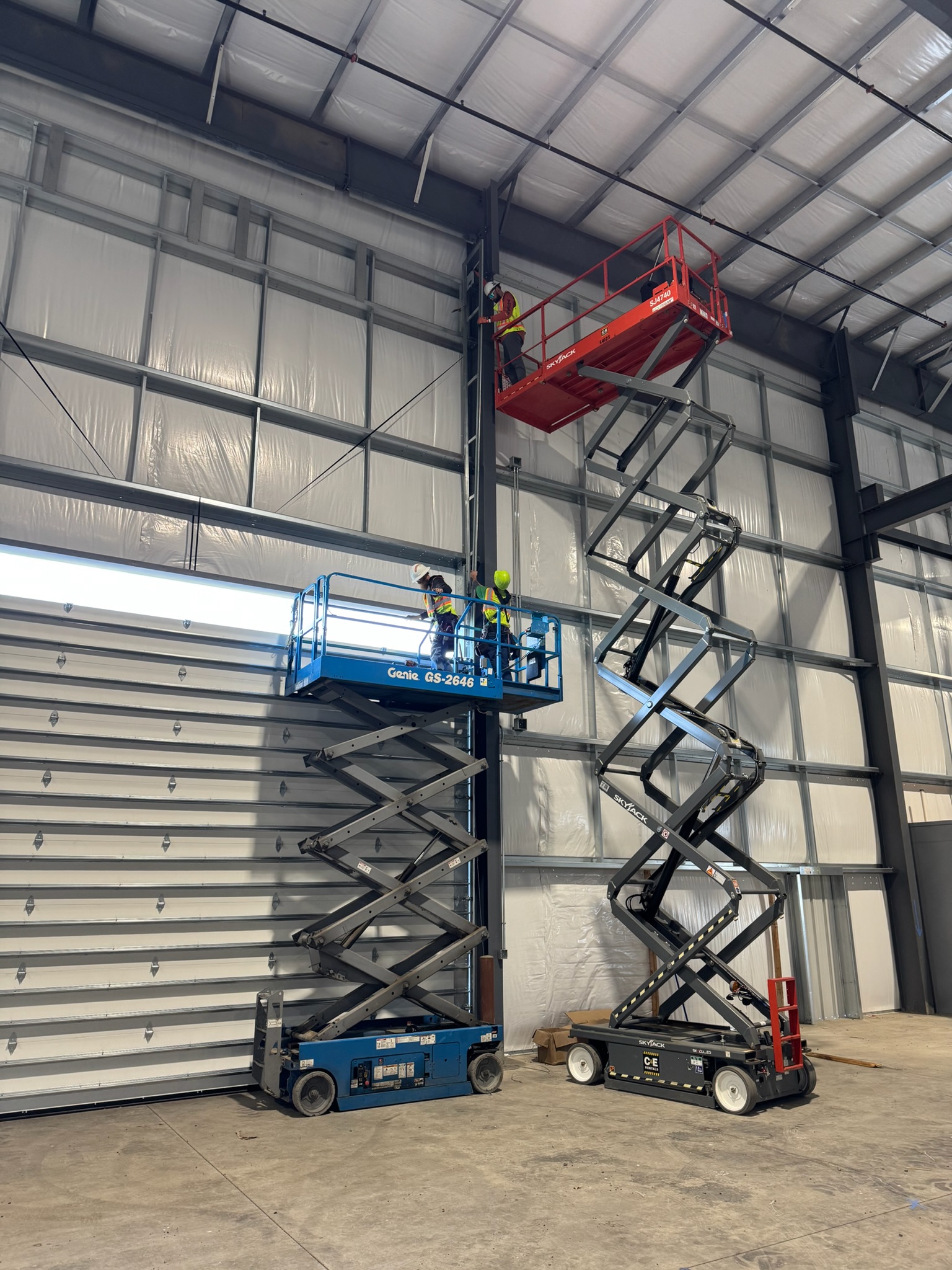
A commercial sectional door can weigh more than half a ton. Commercial garage door installation is not simply a larger version of hanging a residential door — it is a different job, with different failure modes, and almost everything that makes it safe is invisible by the time the truck pulls away.
Here is what actually happens on one of those days, and why the parts that take longest are the parts nobody ever sees.
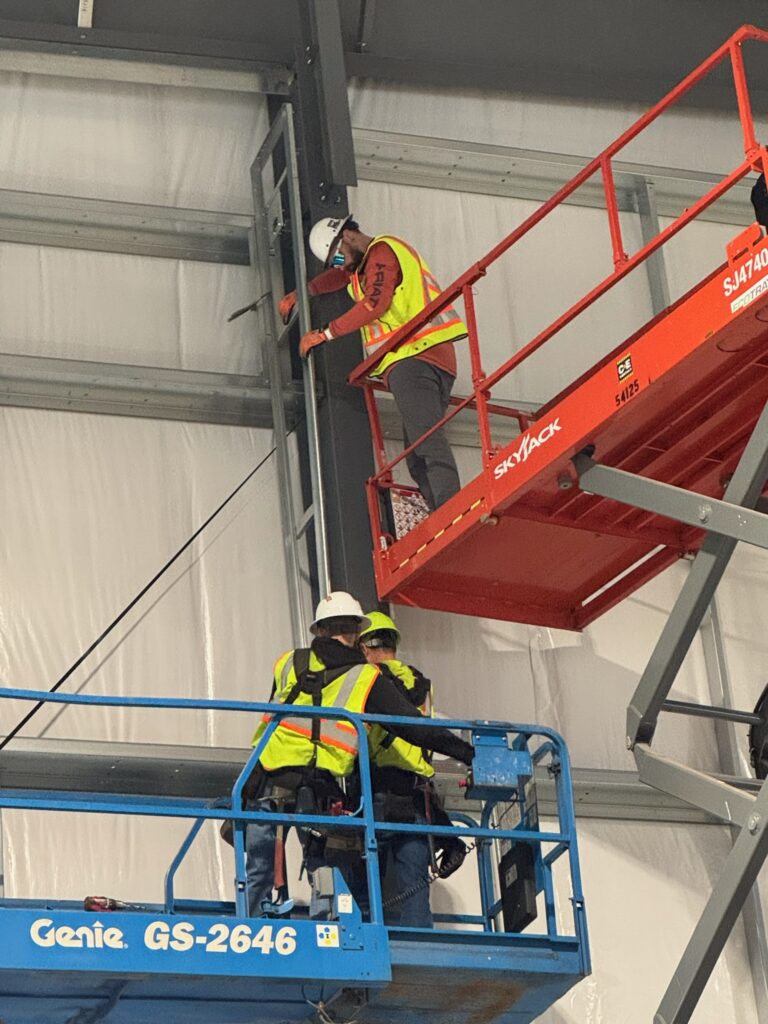
Why the door weighs what it does
Weight comes from size and from steel. A residential double door might be sixteen feet wide and seven feet tall. A commercial opening is often twenty feet wide and fourteen or more tall, built from heavier-gauge steel, frequently insulated, and sometimes rated to resist wind load. Multiply thickness by area and the number climbs quickly. A large insulated steel sectional can pass a thousand pounds without being remarkable in any way.
That weight is the whole engineering problem. It has to be lifted smoothly, held at any height, stopped safely if something fails, and cycled thousands of times without drifting out of adjustment.
The day starts with the opening, not the door
Before a single section comes off the truck, the crew measures the opening — width and height, then headroom above it, backroom behind it, and sideroom either side for the vertical track. Then they check whether the jambs are plumb, the header is level, and the structure behind them will actually carry the load.
This is where jobs go wrong. Steel buildings move. Concrete gets poured a little high. An opening that is an inch out of square will bind a door that has to travel fourteen feet on both sides simultaneously, and no amount of adjustment at the end will fix a frame that was never right at the start. Finding that on day one is a phone call. Finding it with the door half-installed is a lost day.
What commercial garage door installation looks like hour by hour
Track and jamb brackets go on first, fixed into structure rather than into sheathing. Then the sections are set one at a time, starting at the bottom, each one levelled and fastened before the next is stacked on top. Rollers and hinges go on as the stack rises. Get the bottom section out of level by a quarter inch and every section above it inherits the error.
The horizontal track goes up next, hung from the building rather than from hope, and joined to the vertical track so the transition is smooth under load. Only then does the counterbalance go in: the shaft, the drums, the springs, and the cables.
The counterbalance is the entire job
People assume the opener lifts the door. It does not. The springs lift the door; the operator only overcomes the small remaining imbalance and controls the travel. If the spring package is wrong, the operator burns out, the cables fray, and the door becomes genuinely dangerous.
Getting it right means calculating for the actual weight and drum size, not a rule of thumb, and specifying cycle life to match how hard the door will be worked — a shipping bay that opens forty times a day needs a very different spring than a storage building that opens twice a week. The hardware is built and rated to published standards; DASMA, the industry’s ANSI-accredited standards body, publishes the specifications this equipment is measured against, including ANSI/DASMA 102 for sectional overhead-type doors and ANSI/DASMA 110 for lifting cables.
Winding those springs is the part of the day with the least margin for error. It happens under tension, with proper bars, by people who have done it many times. It is also the single best reason not to treat a commercial door as a maintenance-staff project.
The last hour is the one that matters
With the door hung and the springs wound, the crew disconnects the operator and lifts the door by hand. A correctly balanced door stays where it is put — waist height, head height, anywhere. If it creeps up or drifts down, the springs get adjusted before anything else happens.
Then the operator goes on and gets set: travel limits, force settings, photo eyes aligned and tested by breaking the beam mid-travel, reversing edge checked. The door is cycled repeatedly, because problems that hide on cycle one show up on cycle fifteen. Last, someone walks the customer through the manual release and shows them what a healthy door sounds like, so they can tell when it stops sounding that way.
If you are the one buying the door
Ask four questions and you will learn most of what you need. What is the lead time on the door and on the operator? How much headroom does this design need, and does my building have it? Who is responsible if the opening needs structural work? And is the spring package specified for how often we will actually use this door?
Any competent installer will have clear answers. If the answers are vague, that is information too.
We install and service commercial doors and heavier industrial doors across Lane County, and we service doors year-round once they are in — including doors somebody else installed. If you have an opening to fill or a door that has stopped behaving, get in touch and we will come and look at it.
Related Posts